
Imported coal is still cheaper than domestic supply in southern China. Russian coal leads with an advantage of $20.50 a tonne, followed by Indonesian and Australian coal, while China’s largest power plants are burning 8% more coal than a year ago.
The import advantage was broadly flat week on week: higher domestic prices were offset by firmer FOB prices and freight. South African and Colombian coal became less competitive.
As long as Chinese domestic prices keep adjusting towards international levels, strong import demand supports seaborne prices. A clear rise in Chinese domestic output could end that cycle.
Chinese mine output, port stocks at Qinhuangdao and other Bohai Sea terminals, and the renminbi exchange rate.
The import arbitrage compares the delivered cost of foreign coal at Guangzhou, adjusted to 5,500 kcal/kg NAR, with domestic coal delivered to the same market. A positive number means imports are cheaper. On this basis Russian coal was $20.50 a tonne cheaper than domestic supply, against $19.70 a week earlier; Indonesian coal $12.50 (from $12.10); and Australian coal $9.30 (from $9.20). By contrast, the premium for South African coal more than doubled, from $4.40 to $10.50 a tonne, and for Colombian coal it rose from $27.00 to $39.20.
Domestic prices at Qinhuangdao gained only a little ground last week, and FOB Qinhuangdao stood at CNY1,040 a tonne. Most international FOB prices rose. Freight fell until mid-week but then recovered part of the decline. The renminbi has stayed below 6.7 to the US dollar for two weeks — its strongest level since June 2022 — and firmed further to 6.67 from 6.69, which makes imports cheaper in local terms.
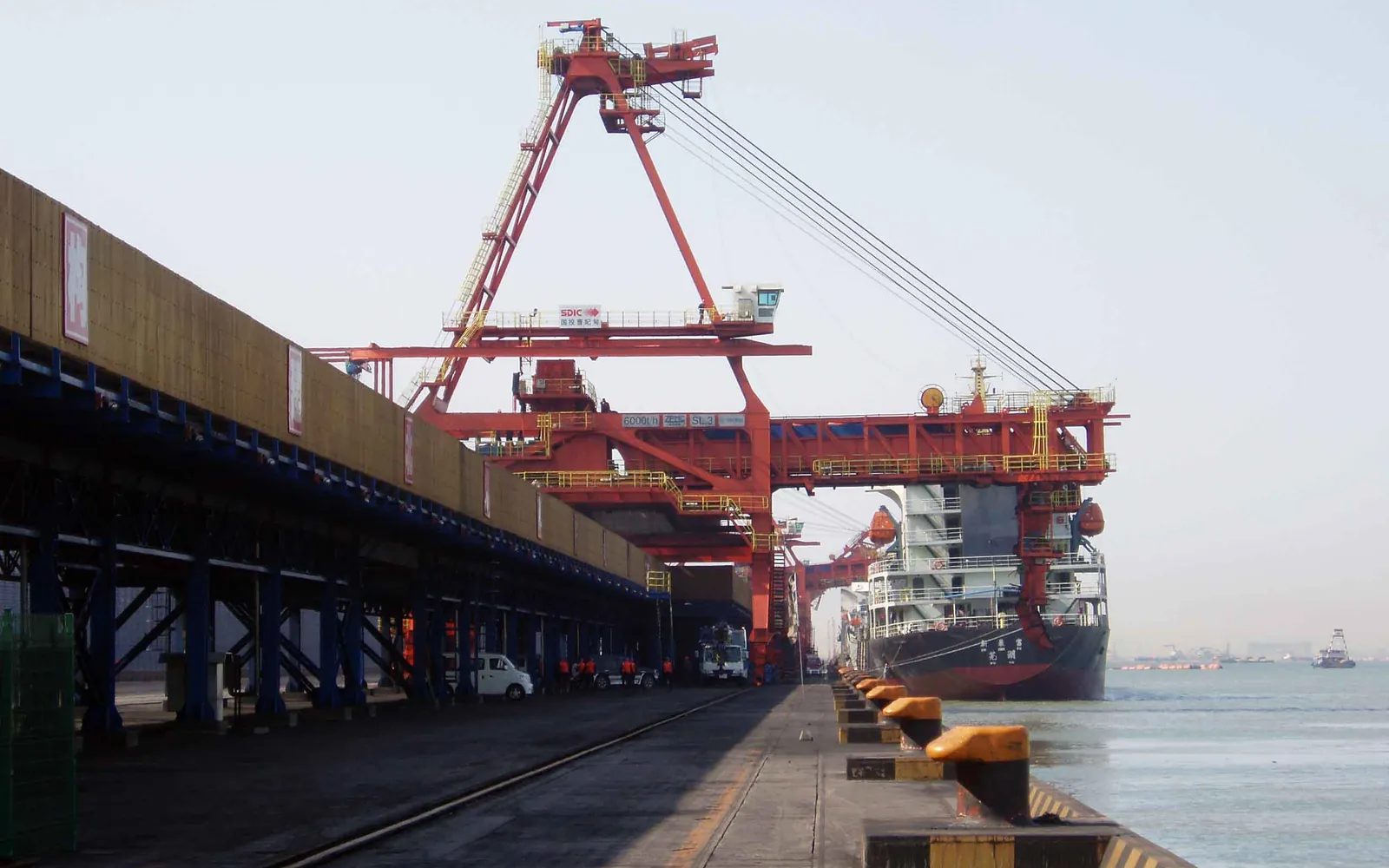
Demand at power plants is firm. According to the China Coal Transportation and Distribution Association (CTDA), China’s six largest thermal power generators burned 835,000 tonnes of coal on 26 October, unchanged from a week earlier but 8.2% more than a year ago and 5.7% above the seasonal average since 2021. Their stocks rose 1% week on week to 14.6 million tonnes, 10.3% above the seasonal average.
At the Bohai Sea terminals, inventories fell 3.3% in a week to 16.3 million tonnes, though they were still 6% higher than a year earlier. Qinhuangdao held 5.9 million tonnes (down 7% week on week), Caofeidian 4.8 million tonnes (down 2.6%) and Jingtang 3.6 million tonnes (up 7%, and 37.5% higher than a year ago).
In India, Indonesian coal currently offers the best value in use. All Indonesian grades arrive on India’s west coast at around INR2,300 per gigacalorie, unchanged from last week, while Russian coal is now slightly more expensive.
Source: Industry coal market report, 26 October 2026. Figures as reported on 26 October 2026; forecasts are the report author's and may be revised. Summary and wording by Megawise.
← All Market Watch stories